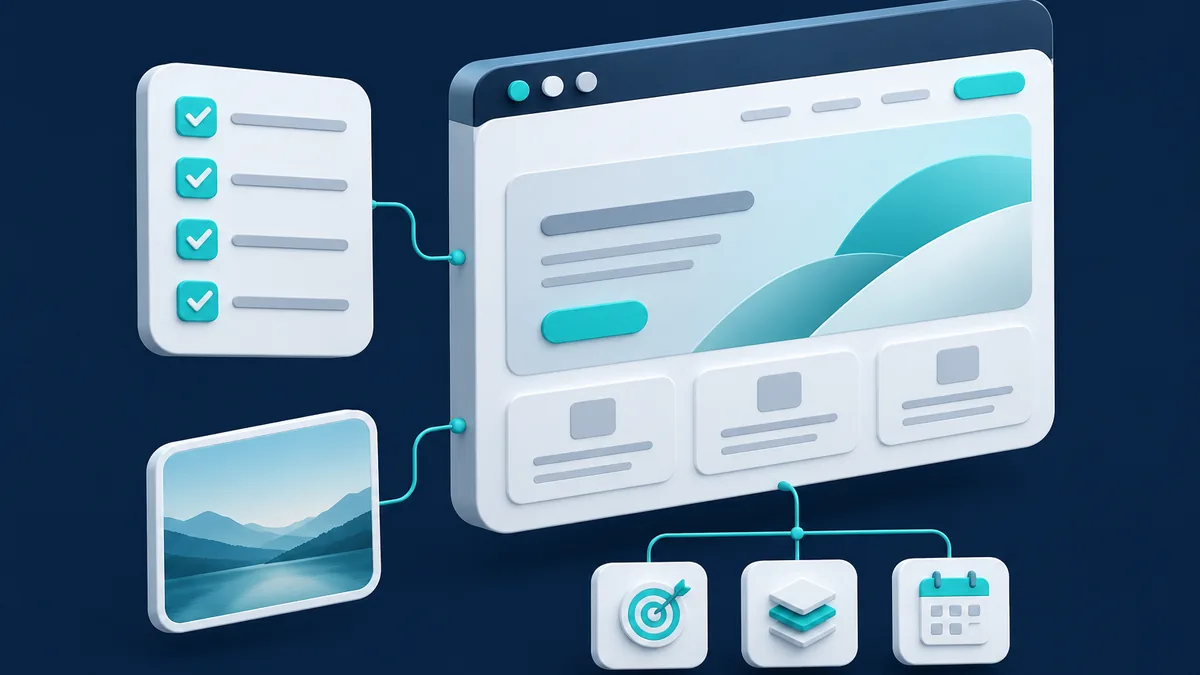
You do not need to have every word and image ready before the first conversation. Start by identifying your goals, the materials you have and the decisions you still need to make.
Define your main objective
What should someone be able to do after visiting your website? Explore your services, request a quote, book a meeting, reserve a stay or buy a product?
Your business may have several objectives, but it helps to set priorities. These guide the page structure, the information you highlight and the routes to getting in touch.
If your priority is to receive quotation requests, consider what visitors need to know and what information your team needs to respond.
Understand your audience and their questions
Describe the customers you want to reach: what they are looking for, the challenges they face and what they need to know before making a decision.
Collect the questions you receive by phone, email or in sales meetings. They help you create useful content that addresses customer needs.
If you serve international audiences, decide which languages you need and who will translate and maintain the content.
Gather your content and brand materials
Take stock of what you already have:
- Your logo and brand guidelines.
- A company introduction and current contact details.
- Service or product descriptions.
- Photographs, videos and documents.
- Projects, testimonials or other examples you have permission to share.
Identify what can be reused, what needs updating and what needs to be created. Check that you have permission to use the images and other materials.
Your copy should make the offer clear: who it is for, what need it addresses and what the visitor should do next.
Plan your pages and functionality
Prepare an initial list of pages. Depending on your business, these might cover your company, services, projects, frequently asked questions and contact details.
Then identify what your website needs to support: quotation requests, bookings, online sales, a customer area, registrations or connections to other applications.
Separate what is essential for launch from what could be added later. This makes it easier to define the budget and timescale.
If you already have a website, review it
For a redesign, identify the pages, content and features that should be kept or improved.
Gather information about the domain, hosting, content management system and existing analytics tools. Confirm who controls the accounts and how access can be provided securely.
Existing URLs also need to be reviewed. When a page moves, visitors may need to be redirected to the corresponding page on the new website. Include this in your launch planning.
Agree responsibilities, budget and timescale
Choose one person to coordinate information and bring together your company’s approvals. Decide who supplies the copy, checks the images and approves the structure and design.
Share an indicative budget and any important business dates. A trade show, campaign or product launch should be known from the start.
Ask for a proposal that sets out deliverables, responsibilities, recurring costs and any external services. The schedule should allow time for content preparation and reviews.
Plan how the website will be managed after launch
Before the project is complete, decide who will update the website and which content they need to be able to change.
Agree the technical support arrangements, including maintenance, backups and management of associated services.
Decide how you will assess results. Depending on the objective, you might track enquiries, quotation requests, bookings or sales. Agree who will review this information and how often.
What to prepare for your first conversation
- A brief description of your company and its customers.
- The website’s main objective.
- Your current website address, if you have one.
- An initial list of pages and features.
- The materials you have and the content you still need.
- Two or three reference websites, with notes on what works well for your project.
- An indicative budget, your preferred timescale and the project contact.
You do not need all the answers before you start. This preparation gives the conversation a practical basis and helps identify where you need support.
Planning a new website? Vectweb helps you organise your content, define the structure and choose the right functionality for your business.